Every surveyor knows the phone call. “I’ve had a cheaper quote. Can you match it?”
In many parts of the country there are more surveyors chasing the same instructions than there were a few years ago. Comparison sites line practices up by price. Panel work pays what it pays. And a buyer who has never commissioned a survey before has little to go on except the number at the bottom of the quote.
The easy response is to drop the fee. We understand why so many firms do it. We also think it is the slowest way to go out of business.
When everyone sells the same thing, the only thing left to compete on is price. The way out is to stop selling the same thing.
Why cutting the fee doesn’t work
A lower fee does not make the inspection shorter. The roof void is the same size. The damp meter still needs to go round every wall. The report still has to be right.
So the only places a cheaper survey can come from are the surveyor’s time and the depth of the advice. Either the practice works longer for less, or the client gets less for their money. Neither builds a business.
There is a quieter cost too. A practice known for being cheapest attracts clients who choose on price, and those clients leave the moment someone undercuts them. Price is the one advantage anybody can copy by the afternoon.
Buyers want more than a list of defects
Think about what the client is actually doing. They are about to make one of the largest purchases of their life, and they want to know what they are getting into.
A condition rating tells them a roof covering needs attention. The questions they ask next are the ones that matter to them. What will it cost? When does it need doing? What else is coming in the next five years? Could we extend? How much should we insure it for?
Those questions are usually answered somewhere else, by someone else, weeks later, if at all. Yet the surveyor has already stood in every room, looked at every component and formed a view on all of it.
The knowledge is already in your head when you leave the property. The opportunity is in turning it into something the client can use.
Value you can see, and value you can sell
Higher value has to be visible. Saying “our reports are more thorough” is something every firm says. Handing the client a document that answers the questions above is something they can hold, read and show to their family.
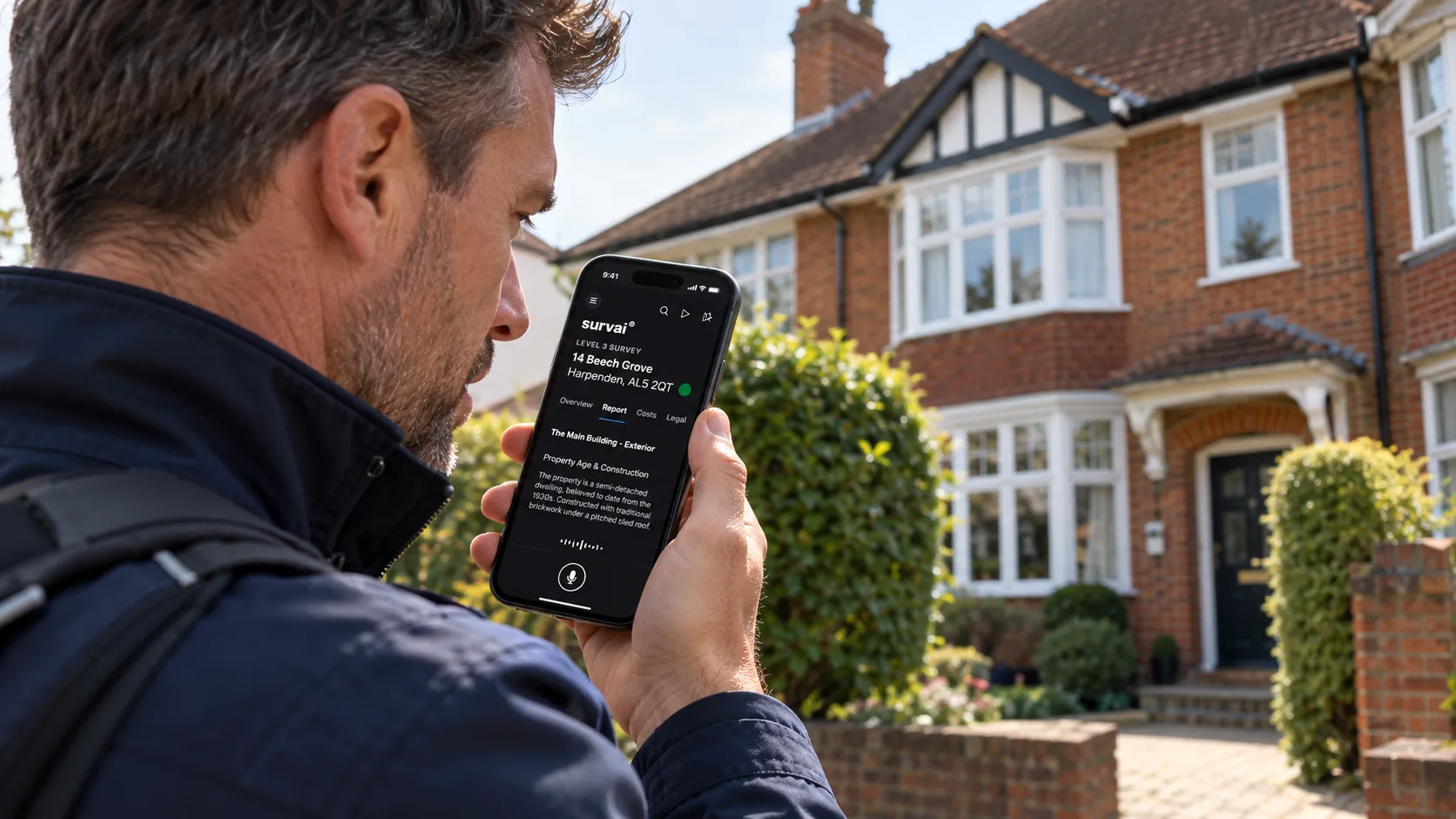
That is why, as part of SurvAI, we designed a set of reports that come from the same inspection as the survey itself:
- Estimated Costs & Cost Life Cycle Report: the repairs you recommend, priced, with a five-year budget, the spend across the years of ownership and a suggested negotiation allowance.
- Property Care Plan: inside the same report, a yearly checklist and maintenance rhythm built from the components of this particular house, not a generic leaflet.
- Extension Feasibility Report: the planning context for the property and the extension routes you select, with photographs from our augmented reality camera showing a typical extension for a property of its type.
- Reinstatement cost assessment: a rebuild figure for insurance, worked up from the floor area and any extra items such as a garage or outbuilding.
Each one is written from what you recorded on site. There is no second visit and no starting again.
Two ways to offer them
We find there are two sensible ways to use these reports, and most practices will use both.
Bundled into the survey. Include one or more with your Level 2 or Level 3 service and you are no longer quoting the same thing as the firm down the road. When a client compares two quotes and one includes a costed five-year budget and a care plan for the house, the conversation changes from “who is cheapest?” to “what do I get?”.
Sold as a separate item. Offer them as paid extras when the client books, or afterwards when the questions start. A buyer planning a kitchen extension will often pay for a feasibility report. A first-time buyer worried about the roof will often pay for the costings. These are new lines of income from instructions you have already won.
You choose, report by report. Some clients want the core survey and nothing else, and that is fine. The point is that you have something more to offer when they do want it.
New revenue without new instructions
Most practices try to grow by finding more surveys. That means more marketing, more travel and more hours on site.
There is another route. Earn more from each instruction you already have. If a proportion of your clients add one of these reports, your income per inspection rises without another property in the diary. Over a year, across a team, that adds up.
It also makes the practice easier to grow. New income that does not depend on another site visit is income that scales.
Growth doesn’t only come from more surveys. It comes from more value in every survey.
Higher value has to be quick to deliver
None of this works if the extra reports take an evening each. A costings document typed up by hand, or a feasibility note written from scratch, quickly eats the profit it was meant to create.
That is the problem we built SurvAI to solve. The costed repair schedule is built as you write the report, and the cost report is drawn from that same schedule, so the figures in the survey and the figures in the standalone report always agree. The care plan is matched to the components you have described. The feasibility photographs come straight from the camera into the report, each one clearly marked as not to scale and not a design proposal, with any design to be verified by a qualified chartered architect.
You review it, you adjust it, and you put your name to it. The expertise stays yours. The repetitive work does not.
Compete on what you know
A race to the bottom only has losers. The practices that do well in a crowded market are the ones that give clients a reason to choose them that has nothing to do with being the cheapest.
Your knowledge of buildings is worth more than the price of a standard survey. The task is to package it in a way the client can see, understand and pay for.
That is how SurvAI helps you scale your business: new revenue streams, added value for every client, and more return from every inspection you carry out.